Description
Overview
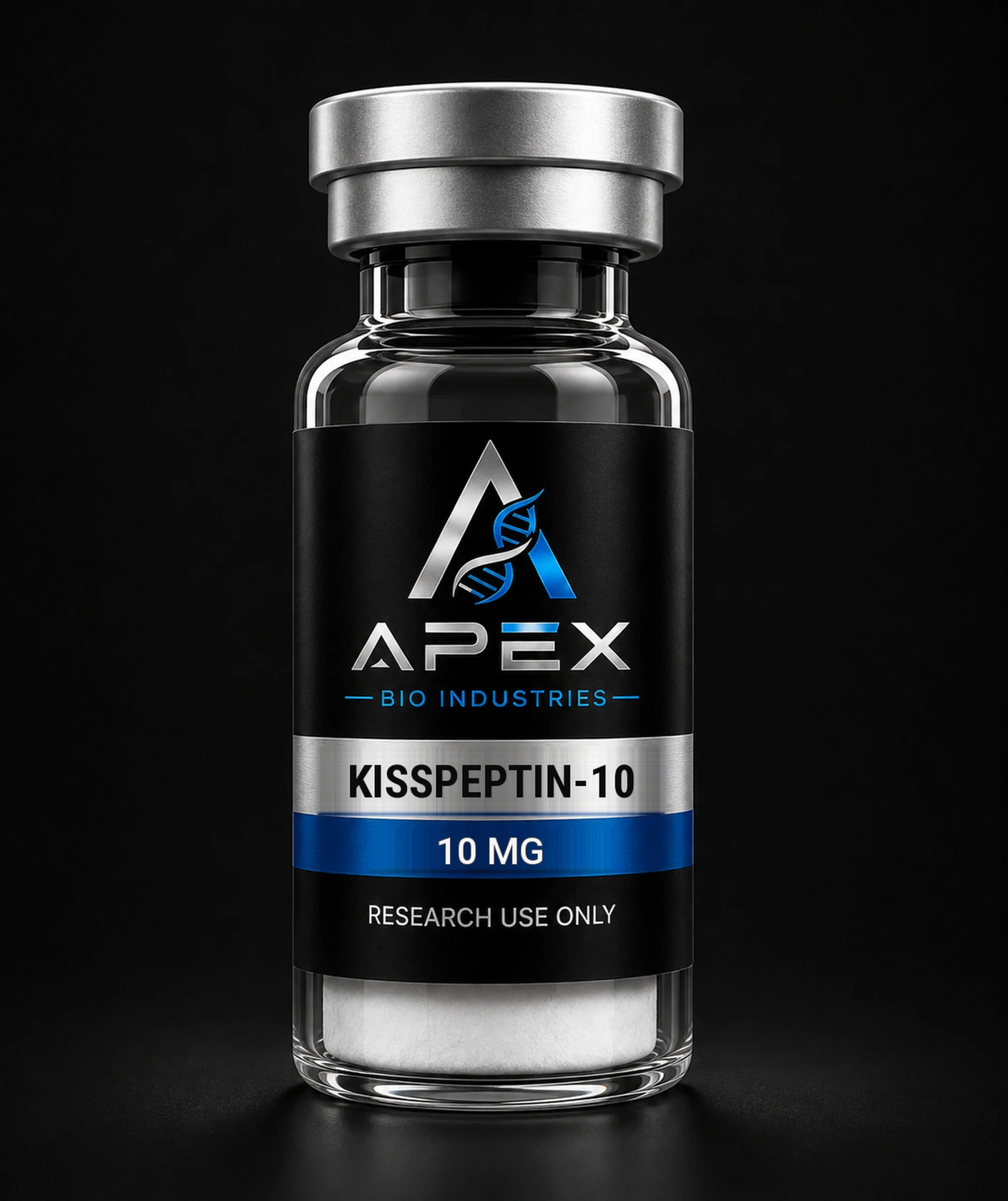
Kisspeptin-10 is a short active fragment of the kisspeptin family of neuropeptides. Kisspeptin signaling through the KISS1 receptor (KISS1R/GPR54) is a central regulator of the hypothalamic-pituitary-gonadal axis. Human studies have used kisspeptin compounds to investigate GnRH, LH and FSH release, reproductive physiology, fertility-related endpoints, and brain responses to sexual and emotional stimuli. Kisspeptin-10 should be presented as a research tool for reproductive-neuroendocrine biology rather than a general “hormone optimizer.”
How It Works
- KISS1R activation: Kisspeptin activates KISS1 receptors on GnRH-related neuronal pathways.
- GnRH signaling: Activation increases downstream GnRH signaling and can alter LH and FSH secretion.
- Neurobehavioral signaling: Human imaging studies have explored effects on limbic and reproductive brain networks.
Research Areas
- Reproductive endocrinology
- GnRH/LH/FSH signaling
- Fertility research
- Sexual and emotional brain processing
Research / Study Context
- Human endocrine studies: Investigators have measured LH, FSH, sex-steroid, and reproductive responses.
- Neuroimaging research: Functional imaging has examined brain-network responses following kisspeptin exposure.
Key Research Findings
- Kisspeptin is a key physiological regulator of reproductive hormone signaling.
- Human research supports strong endocrine activity, while research applications remain indication-specific.
- Different kisspeptin fragments and formulations should not be assumed identical.
Scientific Reference Starter Set
- Peptide Education Hub: Kisspeptin profile
- PubMed search: kisspeptin-10 human LH FSH
- PubMed search: kisspeptin sexual brain fMRI