Description
Overview
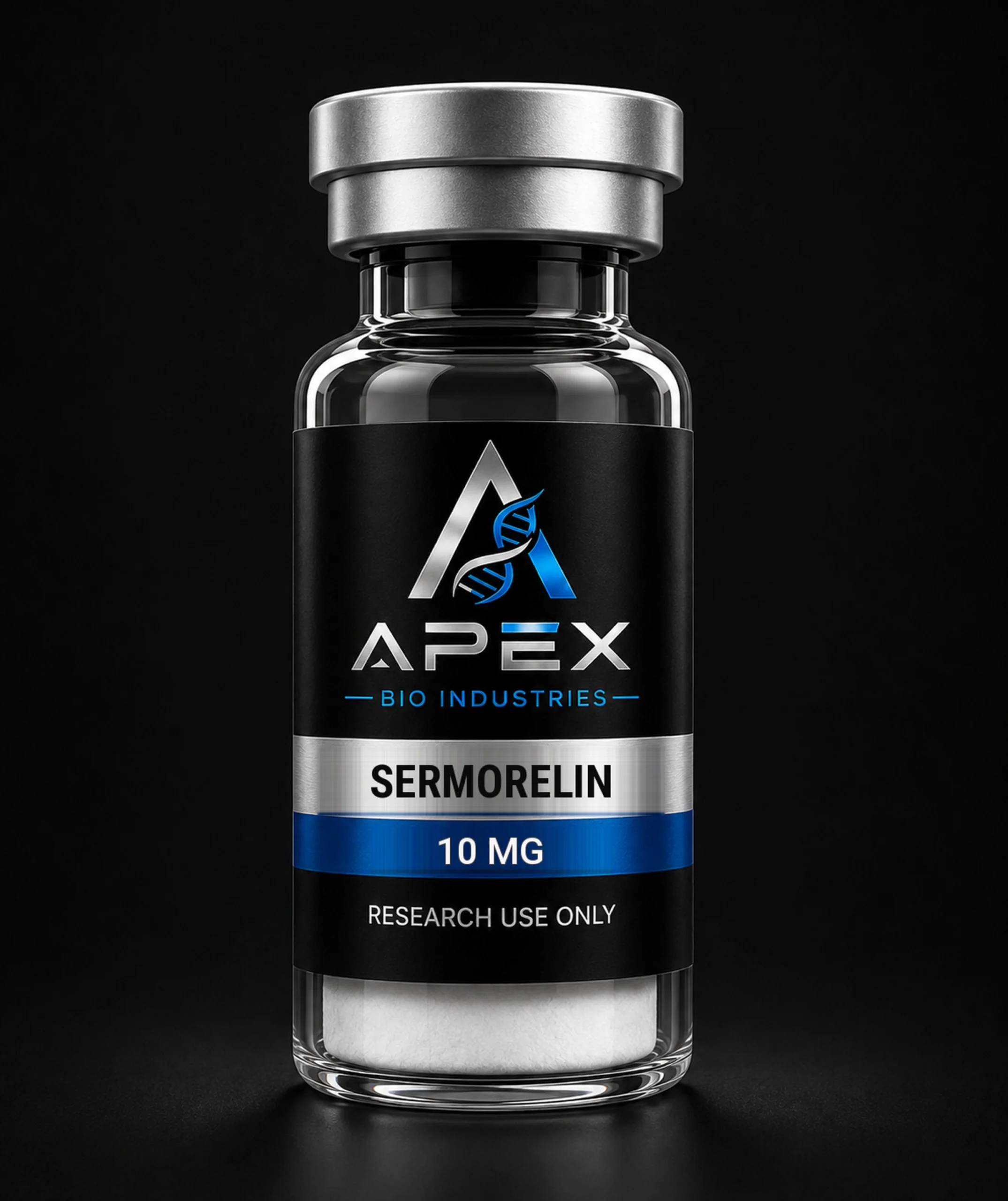
Sermorelin is a synthetic version of the first 29 amino acids of growth-hormone-releasing hormone (GHRH), the minimal sequence needed for substantial GHRH receptor activity. By activating pituitary GHRH receptors, it can stimulate endogenous growth-hormone release while remaining subject to normal hypothalamic-pituitary feedback. Research has focused on GH stimulation testing, pediatric endocrinology, age-related endocrine physiology, and comparison with other GHRH analogs and secretagogues.
How It Works
- GHRH receptor activation: Sermorelin binds pituitary GHRH receptors and stimulates endogenous GH secretion.
- Physiologic feedback: Because signaling occurs upstream of GH release, normal somatostatin/GHRH feedback remains relevant.
- Downstream IGF-1 axis: Research can measure downstream changes in GH and IGF-1 signaling.
Research Areas
- Pituitary function
- Growth-hormone stimulation research
- Endocrine aging
- GHRH analog pharmacology
Research / Study Context
- Endocrine stimulation studies: Human studies use serial GH sampling and endocrine-response endpoints.
- Comparative secretagogue research: Studies compare GHRH analogs with other GH secretagogues or combinations.
Key Research Findings
- Sermorelin is a well-defined GHRH research tool.
- Evidence of GH release should not be converted into broad claims about anti-aging or body composition.
- Regulatory status should be described carefully and separately from historical use.
- Ipamorelin
- Tesamorelin
- CJC-1295 No DAC + Ipamorelin
Scientific Reference Starter Set
- Peptide Education Hub: Sermorelin profile
- PubMed search: sermorelin GHRH 1-29 growth hormone
- PubMed search: GHRH 1-29 pituitary stimulation