Description
Overview
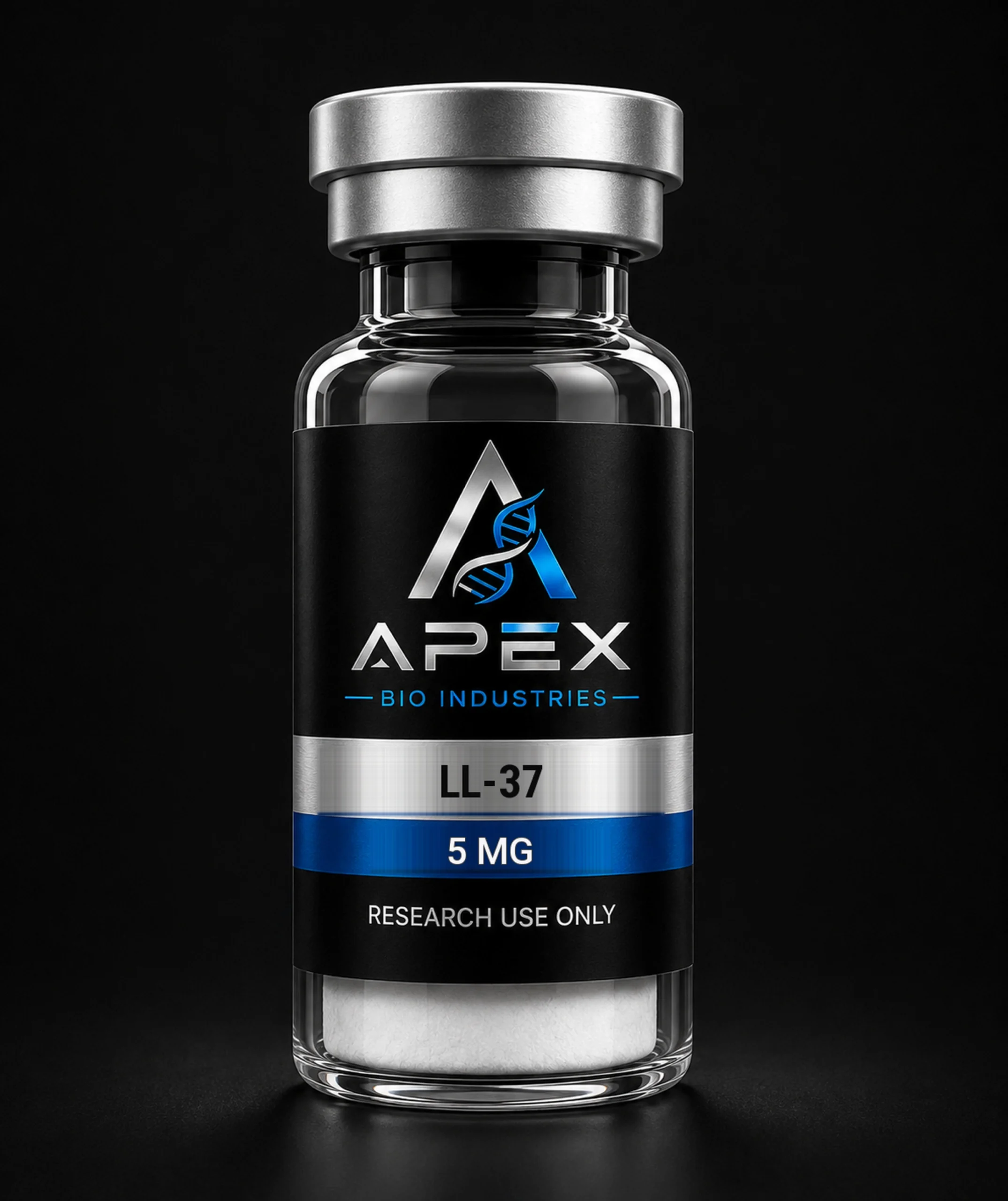
LL-37 is the 37-amino-acid active peptide generated from the human cathelicidin precursor hCAP18. It is a major component of innate host defense and has been studied for direct antimicrobial activity, biofilm interactions, endotoxin binding, immune-cell signaling, angiogenesis, and wound response. LL-37 biology is complex: depending on concentration and tissue context, it can be protective, inflammatory, or dysregulated. Apex should avoid presenting it as a simple broad-spectrum “infection treatment.”
How It Works
- Membrane disruption: LL-37 can interact with microbial membranes and alter membrane integrity in experimental systems.
- Immune modulation: It influences chemotaxis, cytokine signaling, and innate/adaptive immune responses.
- Wound biology: Research has examined angiogenesis, re-epithelialization, and tissue repair.
Research Areas
- Host-defense peptide biology
- Biofilm research
- Wound and skin biology
- Immune signaling
Research / Study Context
- Microbiology studies: In vitro work tests antimicrobial and biofilm endpoints across bacteria, fungi, and viruses.
- Cell and tissue models: Studies evaluate immune signaling, epithelial response, angiogenesis, and wound closure.
Key Research Findings
- LL-37 has broad biological activity beyond direct antimicrobial effects.
- Activity is strongly dependent on concentration and biological context.
- Therapeutic claims require caution because dysregulated LL-37 is also associated with inflammatory disease states.
- Thymosin Alpha-1
- KPV
- BPC-157
Scientific Reference Starter Set
- Peptide Education Hub: LL-37 profile
- PubMed search: LL-37 cathelicidin host defense peptide
- PubMed search: LL-37 biofilm wound healing