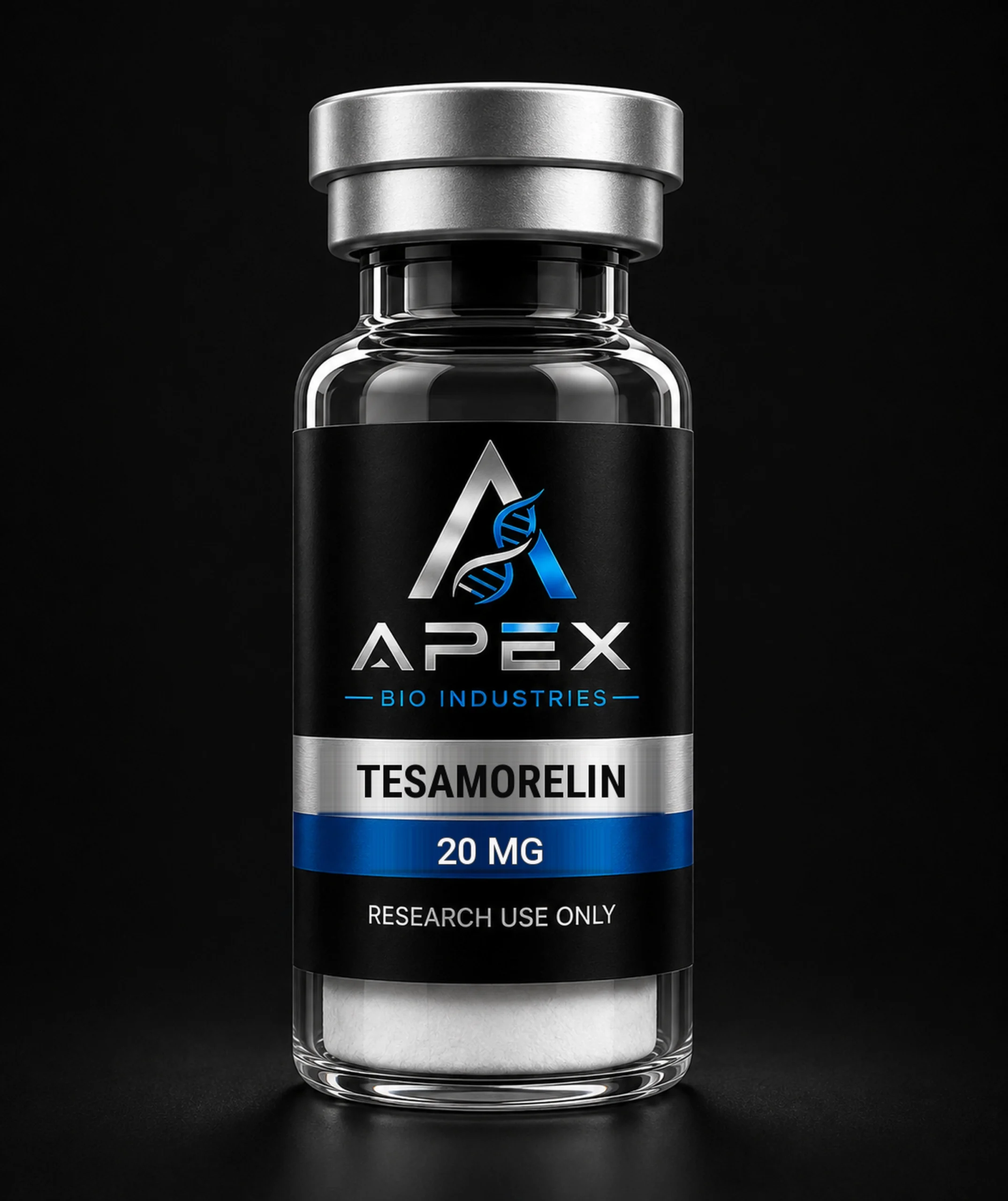
Description
Overview
Epitalon, also spelled Epithalon, is a synthetic tetrapeptide with the sequence Ala-Glu-Asp-Gly. It was developed from research on pineal peptide preparations and has been investigated in cellular-aging, telomere, circadian, antioxidant, and gene-expression models. Some laboratory studies report changes in telomerase activity and telomere-related endpoints, while human literature is largely composed of older studies from a limited number of research groups. Claims about lifespan extension or reversal of human aging should therefore be avoided.
How It Works
- Telomere biology: Cell-culture research has examined telomerase activity and replicative-senescence endpoints.
- Gene regulation: Peptide-gene interactions and transcriptional effects have been investigated in experimental systems.
- Circadian biology: Research has explored pineal signaling, melatonin rhythms, and age-related circadian changes.
Research Areas
- Cellular aging
- Telomere and telomerase research
- Circadian signaling
- Oxidative-stress models
Research / Study Context
- Cell-culture studies: Human somatic-cell models have been used to examine telomerase and replicative lifespan.
- Aging research: Older animal and human studies explored circadian, immune, and gerontological endpoints.
Key Research Findings
- Laboratory evidence supports continued investigation of telomere-related mechanisms.
- Human evidence is limited and not sufficient to establish anti-aging efficacy.
- The literature should be presented with clear separation between cell, animal, and human findings.
Scientific Reference Starter Set
- Peptide Education Hub: Epithalon/Epitalon profile
- PubMed search: Epitalon telomerase AEDG
- PubMed search: Khavinson Epitalon aging