Description
Overview
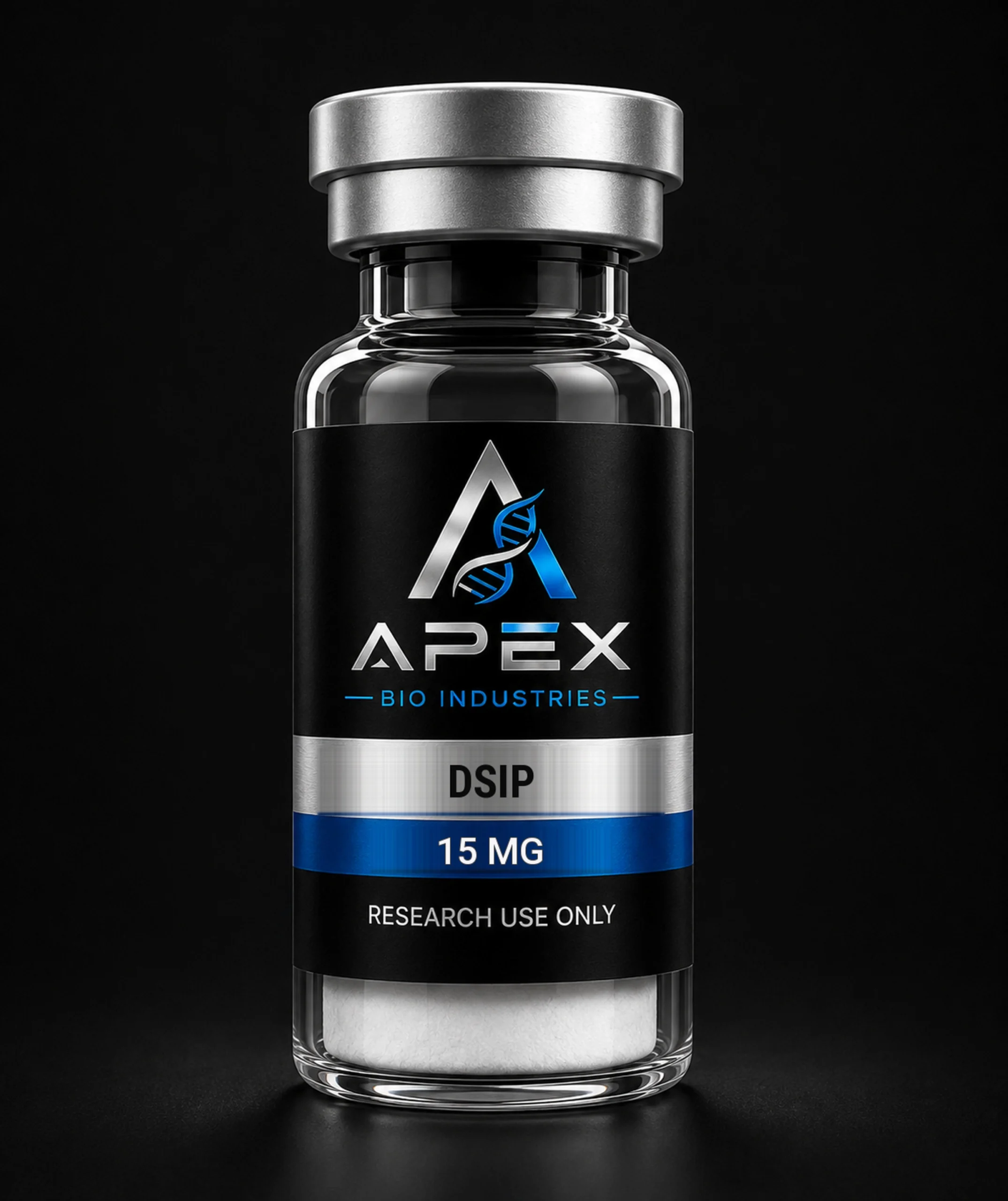
Delta Sleep-Inducing Peptide (DSIP) is a nine-amino-acid peptide originally identified in experiments involving sleep-related brain activity. Older research explored possible relationships with sleep architecture, stress hormones, pain signaling, and circadian regulation. The biological role of DSIP remains incompletely defined, and modern high-quality human evidence is limited. Apex content should therefore present DSIP as a historical and experimental neuropeptide research topic rather than as an established sleep intervention.
How It Works
- Sleep-related signaling: Early experiments examined delta-wave sleep and sleep-architecture changes.
- Neuroendocrine regulation: Research has explored interactions with stress-axis hormones and other neurochemical systems.
- Pain and stress models: Older studies investigated analgesic and stress-response endpoints.
Research Areas
- Sleep architecture
- Circadian and neuroendocrine signaling
- Stress-response research
- Pain-related models
Research / Study Context
- Early human and animal studies: Small studies used EEG, sleep-stage, endocrine, and behavioral endpoints.
- Mechanistic research: Experimental work explored GABAergic, serotonergic, and hormonal pathways, but a single established mechanism has not been confirmed.
Key Research Findings
- DSIP research is older and heterogeneous.
- Evidence for consistent sleep effects in humans is not established.
- The compound remains useful primarily as an experimental neuroendocrine research topic.
Scientific Reference Starter Set
- Peptide Education Hub: DSIP profile
- PubMed search: delta sleep inducing peptide DSIP review
- PubMed search: DSIP sleep neuroendocrine