Description
Overview
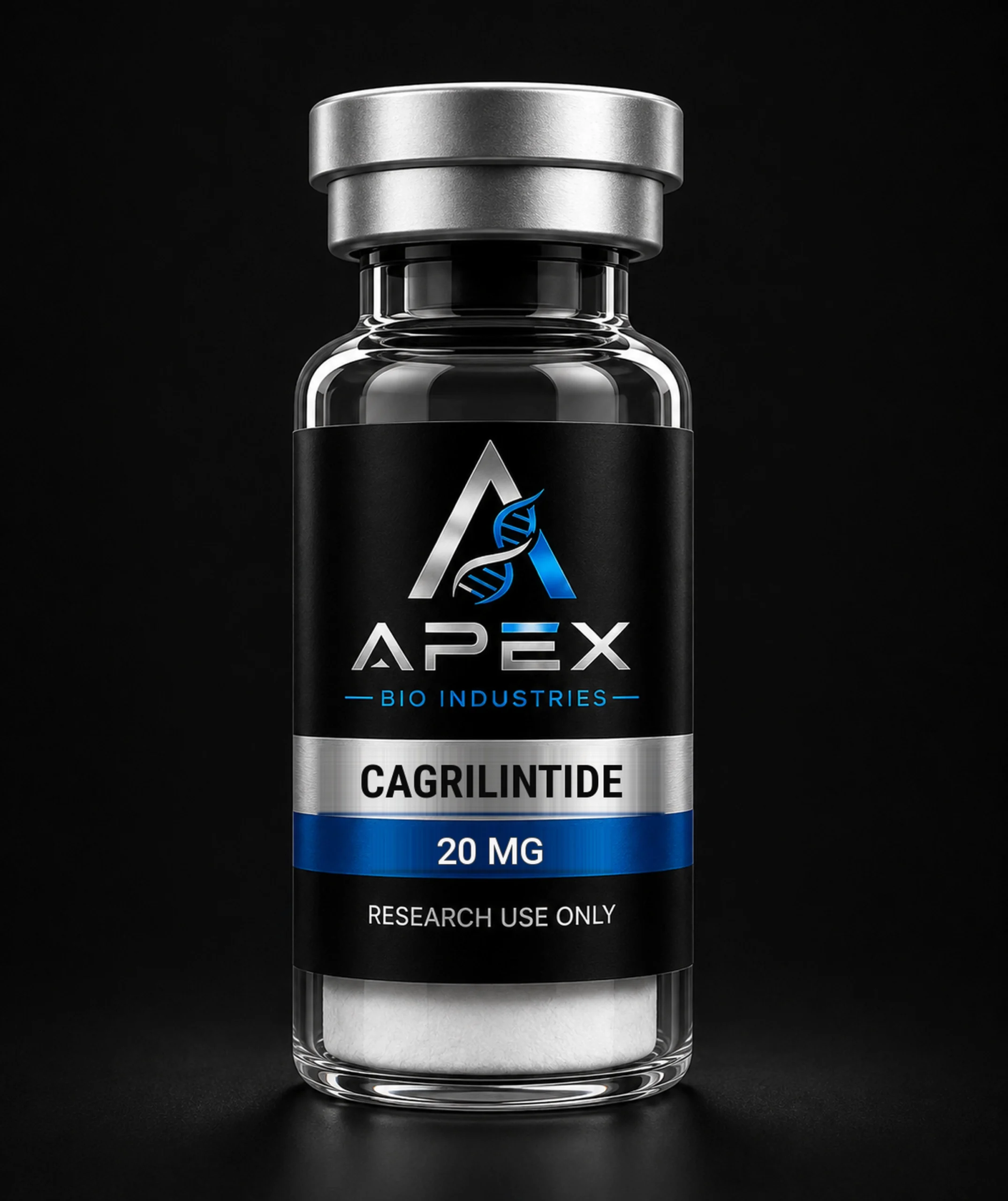
Cagrilintide is a long-acting analog of amylin, a pancreatic peptide hormone involved in meal-related satiety and energy-balance signaling. It has been developed for once-weekly clinical research and has been studied both alone and in combination with semaglutide. Unlike GLP-1 receptor agonists, cagrilintide works primarily through amylin/calcitonin-receptor-family signaling. Clinical studies have evaluated appetite, body weight, tolerability, and combination strategies designed to engage complementary metabolic pathways.
How It Works
- Amylin-receptor signaling: Cagrilintide activates amylin-receptor pathways involved in satiation and meal termination.
- Central appetite regulation: Amylin signaling influences brain regions involved in food intake and energy balance.
- Gastric and metabolic effects: Research has evaluated effects on gastric emptying and post-meal metabolic regulation.
Research Areas
- Satiety and appetite signaling
- Body-weight research
- Combination incretin/amylin research
- Metabolic regulation
Research / Study Context
- Phase 2 obesity research: Randomized human studies have evaluated multiple cagrilintide doses against placebo and active comparators.
- Combination studies: Cagrilintide has been studied with semaglutide to evaluate complementary amylin and GLP-1 pathways.
Key Research Findings
- Human trials demonstrate pharmacologic activity on appetite and body-weight endpoints.
- The compound remains investigational as a standalone research material.
- Combination research is a major area of ongoing development.
- Semaglutide
- Tirzepatide
- Retatrutide
Scientific Reference Starter Set
- Peptide Education Hub: Cagrilintide profile/index
- PubMed search: cagrilintide obesity phase 2
- ClinicalTrials.gov search: cagrilintide