Description
Overview
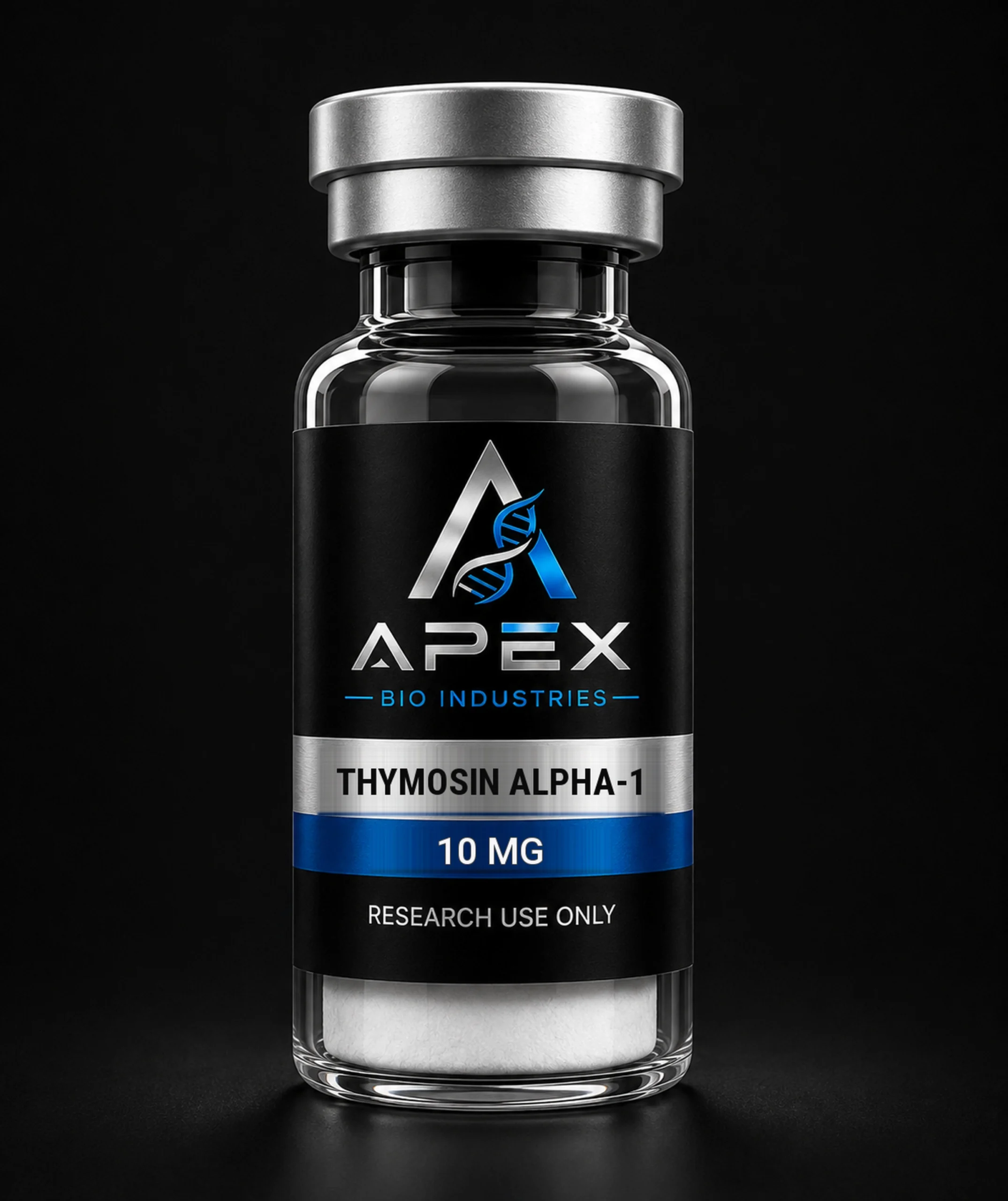
Thymosin Alpha-1 (Talpha1) is a 28-amino-acid peptide originally isolated from thymic tissue and later manufactured synthetically. Research has examined effects on dendritic-cell maturation, T-cell responses, natural-killer-cell activity, Toll-like-receptor signaling, and cytokine balance. It has been studied internationally in viral disease, immune dysfunction, vaccine response, and oncology-adjunct settings. Regulatory status varies by country, and it is not an FDA-approved drug in the United States.
How It Works
- Dendritic-cell signaling: Research has examined antigen-presenting-cell maturation and innate immune recognition.
- T-cell and NK-cell activity: Studies evaluate adaptive immune responses and cytotoxic-cell function.
- Toll-like-receptor pathways: Talpha1 has been investigated as an immunomodulator rather than simply an immune stimulant.
Research Areas
- Innate/adaptive immunity
- Viral host-response research
- Vaccine-response research
- Oncology-adjunct immune research
Research / Study Context
- Clinical immune studies: International trials have evaluated infection, immune function, vaccine, and adjunctive oncology endpoints.
- Mechanistic studies: Cell and animal work examines dendritic cells, TLR signaling, cytokines, and T-cell responses.
Key Research Findings
- Thymosin Alpha-1 has broader human research than many RUO peptides.
- Its effects are immunomodulatory and context-dependent.
- U.S. FDA approval should not be implied.
Scientific Reference Starter Set
- Peptide Education Hub: Thymosin Alpha-1 profile
- PubMed search: thymosin alpha 1 immune modulation dendritic T cells
- PubMed search: thymosin alpha 1 clinical review