Description
Overview
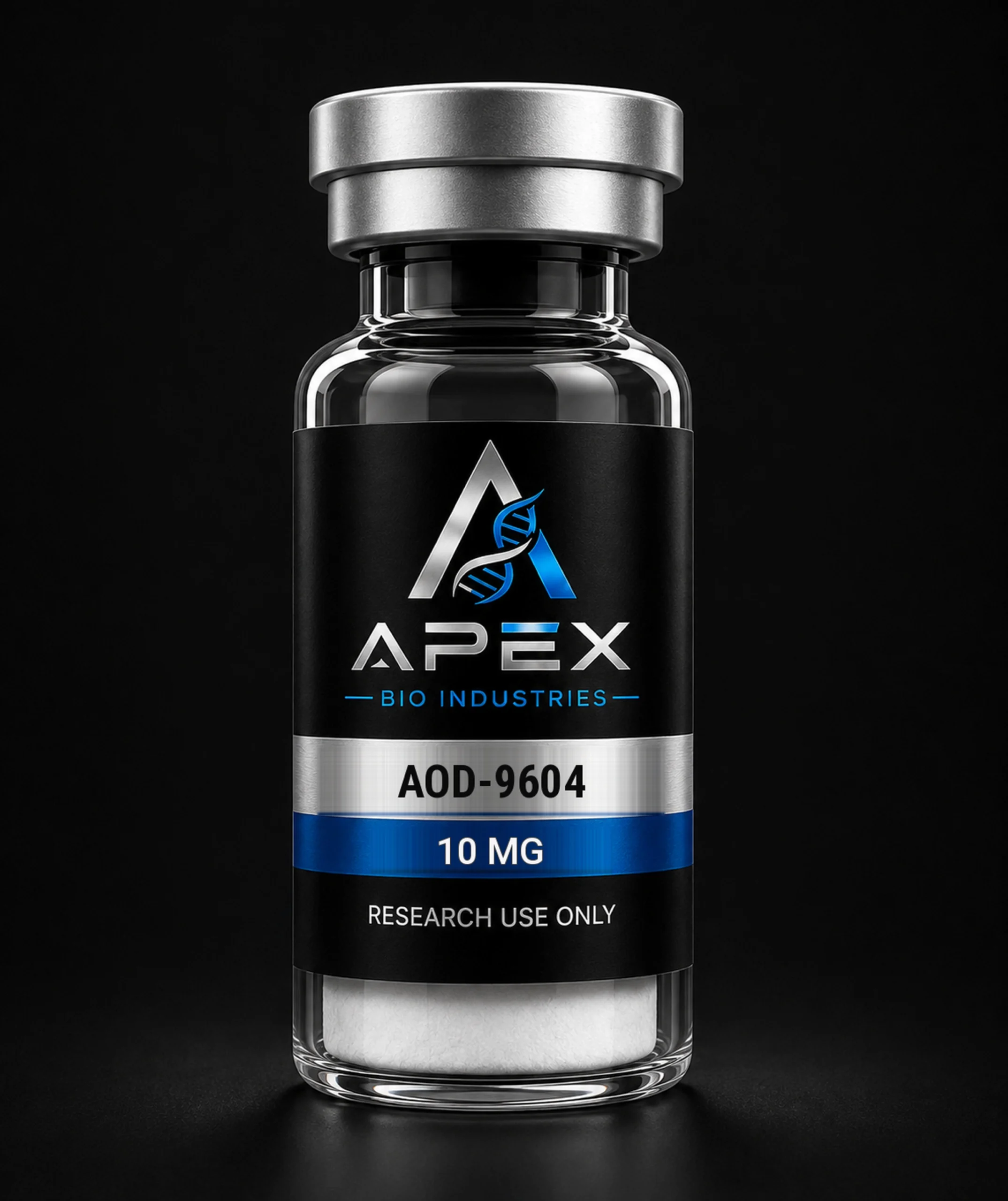
AOD-9604 is a modified peptide derived from the C-terminal region of human growth hormone. It was developed to investigate whether some metabolic effects associated with growth hormone could be separated from its growth-promoting activity. Research has focused primarily on lipid metabolism, body-composition endpoints, and more recently cartilage and musculoskeletal models. Human obesity studies did not establish AOD-9604 as an approved weight-management drug, so the strongest way to present it is as an investigational research compound rather than a proven therapeutic.
How It Works
- Metabolic signaling: Experimental work has examined effects on lipolysis and lipogenesis without reproducing the full growth-promoting profile of intact growth hormone.
- Growth-hormone-fragment biology: The molecule is used to study biological activity associated with a defined region of the growth-hormone sequence.
- Cartilage research: Laboratory and translational studies have also explored cartilage and connective-tissue endpoints.
Research Areas
- Lipid metabolism
- Body-composition research
- Cartilage biology
- Growth-hormone-fragment signaling
Research / Study Context
- Human metabolic studies: Dose-ranging and obesity studies evaluated body-weight and metabolic endpoints; results were not sufficient for drug approval.
- Preclinical cartilage studies: Experimental models have evaluated chondrocyte, cartilage, and tissue-repair endpoints.
Key Research Findings
- AOD-9604 remains investigational.
- Human evidence for clinically meaningful weight reduction is limited.
- Research interest extends beyond metabolism into cartilage and musculoskeletal biology.
- Semaglutide
- Tirzepatide
- Tesamorelin
Scientific Reference Starter Set
- Peptide Education Hub: AOD-9604 profile
- PubMed search: AOD-9604 OR growth hormone fragment 176-191
- ClinicalTrials.gov search: AOD-9604