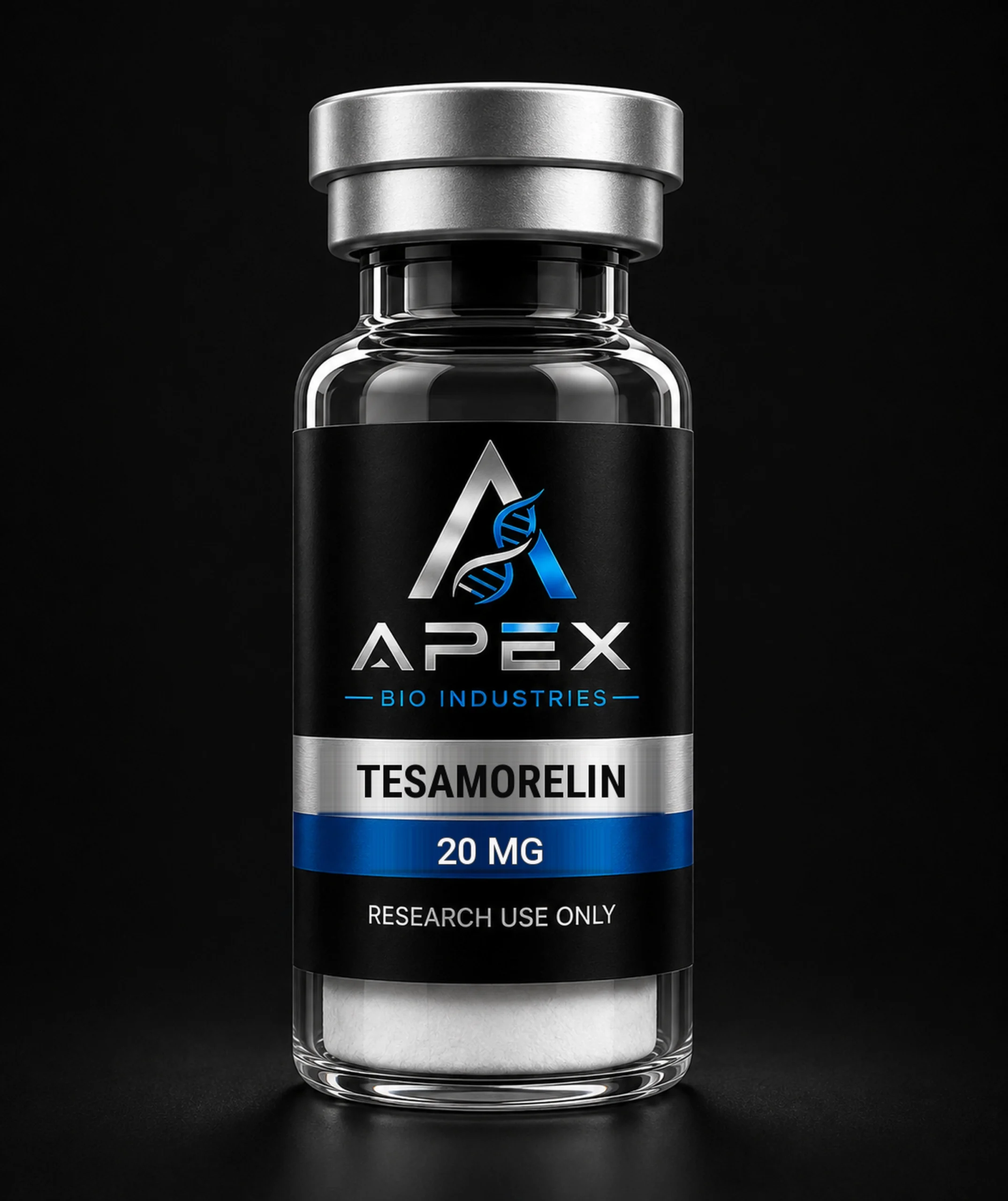
Description
Overview
PT-141, also known as bremelanotide, is a synthetic melanocortin peptide that acts centrally on melanocortin receptors, particularly MC4R-related pathways. Unlike phosphodiesterase inhibitors, its principal research mechanism is central nervous-system signaling rather than direct vascular smooth-muscle action. Bremelanotide is the active ingredient in the FDA-approved prescription drug Vyleesi for a specific female sexual-desire indication; that approval does not make a separate Apex research material an approved drug product.
How It Works
- Melanocortin receptor signaling: Bremelanotide activates central melanocortin pathways involved in arousal and motivated behavior.
- Hypothalamic signaling: Research focuses on brain networks involved in sexual response rather than only peripheral blood flow.
- Neurobehavioral endpoints: Clinical studies have measured desire, distress, arousal, and tolerability outcomes.
Research Areas
- Melanocortin neurobiology
- Sexual-response pathways
- Central nervous-system signaling
- Clinical pharmacology
Research / Study Context
- Phase 3 clinical research: Large randomized trials evaluated efficacy and safety in the FDA-approved indication.
- Earlier male research: Experimental studies also evaluated erectile and arousal-related endpoints in men, but these are not the FDA-approved indication.
Key Research Findings
- Bremelanotide has established central melanocortin pharmacology.
- Its FDA approval is indication- and product-specific.
- Apex should not imply that its RUO material is equivalent to Vyleesi.
- Kisspeptin-10
- Selank
- Semax
Scientific Reference Starter Set
- Peptide Education Hub: PT-141/Bremelanotide profile
- FDA prescribing information: Vyleesi (bremelanotide)
- PubMed search: bremelanotide RECONNECT phase 3