Description
Overview
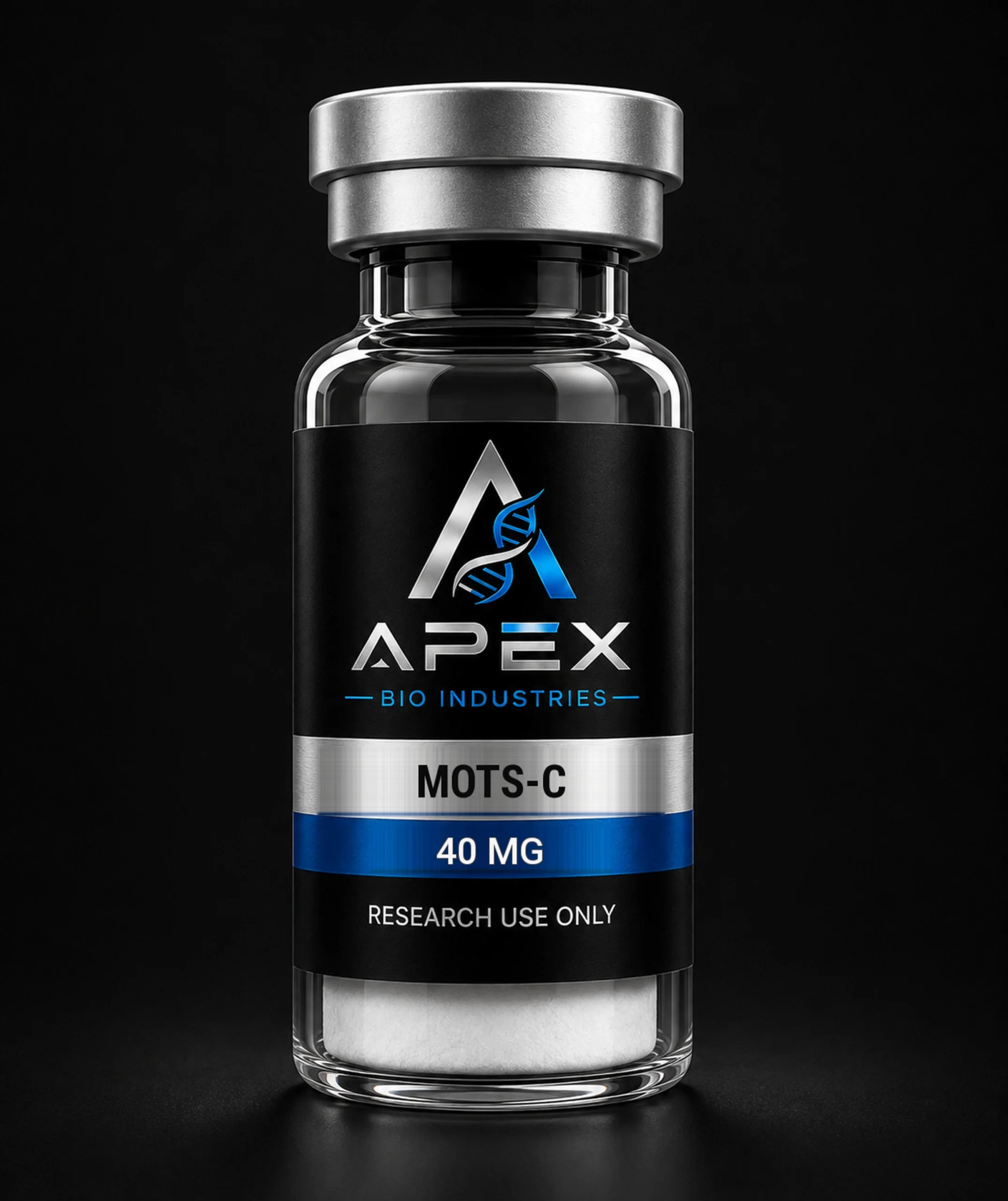
MOTS-C is a mitochondrial-derived peptide encoded within the mitochondrial 12S rRNA region. Research has positioned it as a signaling molecule connecting mitochondrial status with nuclear and metabolic responses. Experimental studies have examined AMPK activation, glucose handling, fatty-acid metabolism, exercise-related signaling, insulin sensitivity, and age-associated physical decline. Much of the intervention evidence comes from animal models, while human studies have also evaluated endogenous MOTS-C biology and exercise responses.
How It Works
- AMPK signaling: MOTS-C has been studied as an activator of AMPK-linked metabolic stress responses.
- Mitochondria-to-nucleus signaling: Research suggests MOTS-C can influence nuclear gene expression under metabolic stress.
- Exercise and metabolism: Studies examine glucose utilization, insulin sensitivity, and exercise-associated changes.
Research Areas
- Mitochondrial signaling
- Exercise biology
- Glucose and lipid metabolism
- Aging and physical-performance models
Research / Study Context
- Animal metabolic studies: Models of diet-induced metabolic dysfunction measure glucose, insulin sensitivity, weight, and activity.
- Exercise/aging studies: Animal and human biology studies examine exercise-induced MOTS-C and age-dependent physical function.
Key Research Findings
- MOTS-C is a leading example of mitochondrial-derived peptide signaling.
- Preclinical evidence is stronger than human interventional evidence.
- Research supports metabolic and exercise-related mechanisms without establishing a human treatment claim.
Scientific Reference Starter Set
- Peptide Education Hub: MOTS-c profile
- PubMed search: MOTS-c mitochondrial peptide AMPK
- PubMed search: MOTS-c exercise age-dependent physical decline