Description
Overview
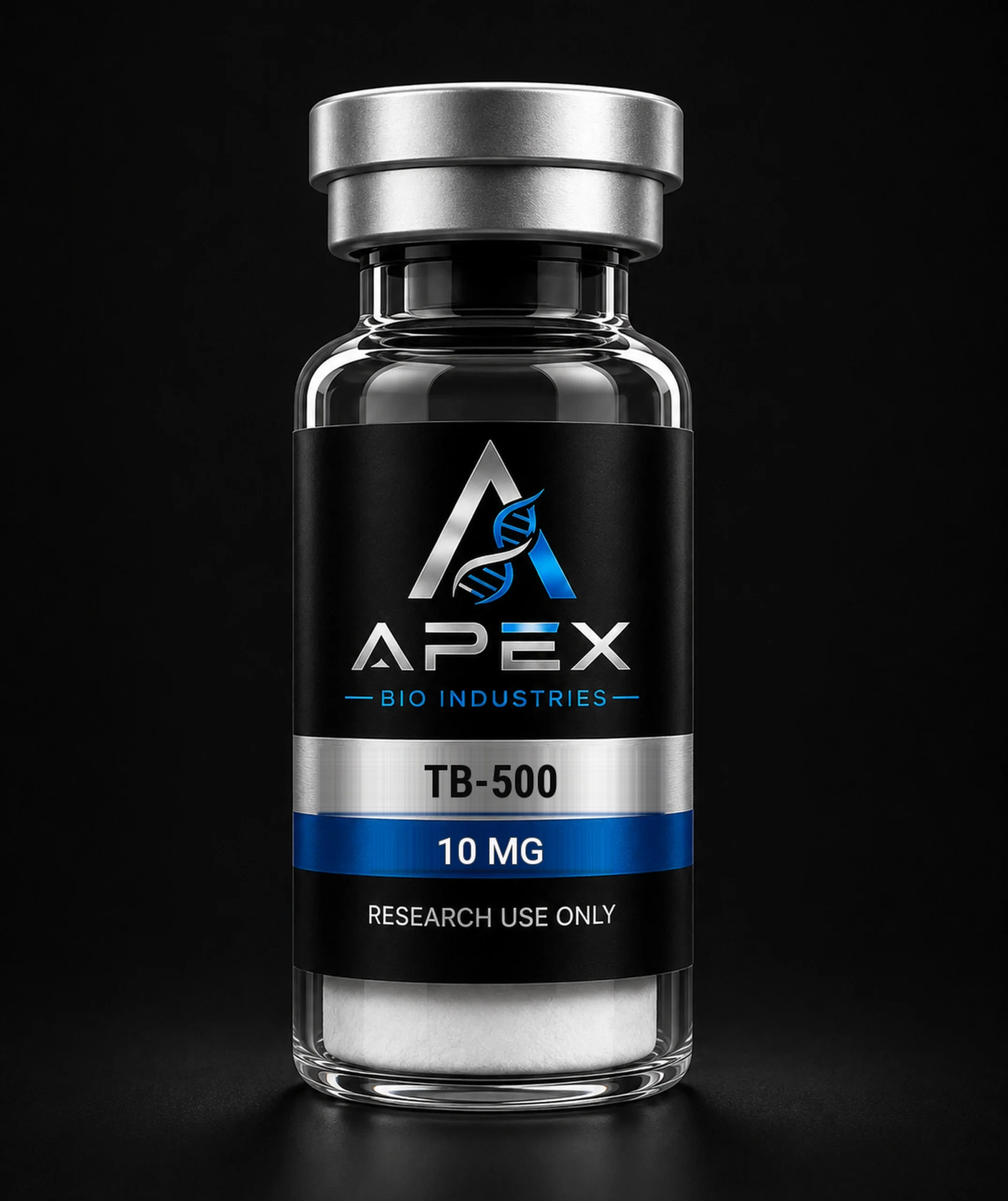
TB-500 is a research-market name associated with peptides derived from or related to thymosin beta-4, a naturally occurring 43-amino-acid actin-binding peptide. Thymosin beta-4 has a substantial experimental literature involving cell migration, angiogenesis, wound response, corneal biology, inflammation, and cardiac repair models. A critical Apex note is that published thymosin beta-4 studies may not use the exact same material sold commercially as “TB-500,” so evidence should not be automatically transferred between them.
How It Works
- Actin binding and cell migration: Thymosin beta-4 regulates G-actin availability and processes involved in cell movement.
- Angiogenesis: Experimental studies have evaluated endothelial migration and new-vessel formation.
- Tissue-response signaling: Research includes wound, corneal, muscle, and cardiac models.
Research Areas
- Cell migration
- Wound-response biology
- Angiogenesis
- Musculoskeletal and cardiac models
Research / Study Context
- Thymosin beta-4 preclinical research: Animal and cell studies measure migration, vessel formation, inflammation, and tissue recovery.
- Translational studies: Some human work exists for specific thymosin beta-4-derived products, but it should not be assumed to validate every TB-500 preparation.
Key Research Findings
- Thymosin beta-4 biology supports broad research interest in tissue-response pathways.
- Exact identity and equivalence of commercial TB-500 materials matter when interpreting evidence.
- Human efficacy for research-market TB-500 is not established.
Scientific Reference Starter Set
- Peptide Education Hub: TB-500/Thymosin Beta-4 profile
- PubMed search: thymosin beta-4 actin cell migration angiogenesis
- PubMed search: thymosin beta-4 wound healing