Description
Overview
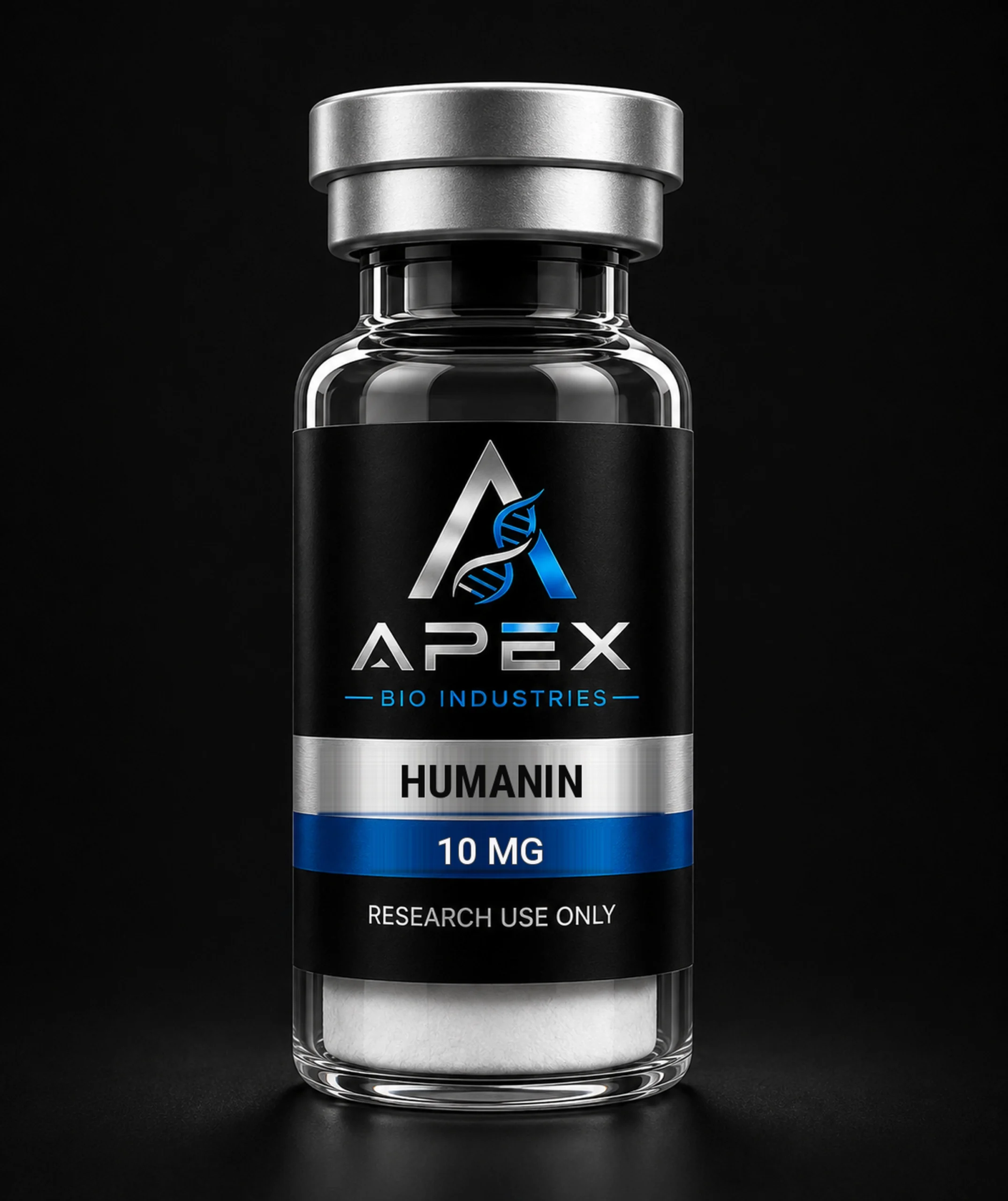
Humanin is a mitochondrial-derived peptide first identified in research on neuronal survival. It has been investigated as a cellular stress-response signal with effects on apoptosis, mitochondrial function, metabolism, and inflammatory signaling. Proposed mechanisms include interactions with BAX and IGFBP-3 and activation of receptor-mediated STAT3 pathways. Human circulating levels have been studied observationally in aging and disease, but interventional human evidence remains limited.
How It Works
- Anti-apoptotic signaling: Humanin has been studied for interactions with BAX and other proteins involved in programmed cell death.
- Receptor signaling: Extracellular signaling through receptor complexes can activate STAT3 and related survival pathways.
- Mitochondrial stress response: Research examines Humanin as part of mitochondria-to-cell signaling during metabolic and cellular stress.
Research Areas
- Neuroprotection models
- Metabolic regulation
- Cardiovascular stress models
- Aging and mitochondrial signaling
Research / Study Context
- Cell and animal research: Models of amyloid toxicity, ischemia, metabolic stress, and apoptosis have been used.
- Human observational research: Studies have measured circulating Humanin in relation to age, metabolic state, and disease phenotypes.
Key Research Findings
- Humanin shows broad cytoprotective activity in experimental systems.
- Translation from preclinical findings to human intervention remains uncertain.
- It is part of the emerging mitochondrial-derived peptide field.
Scientific Reference Starter Set
- Peptide Education Hub: Humanin profile
- PubMed search: Humanin mitochondrial derived peptide apoptosis
- PubMed search: Humanin aging metabolism