Description
Overview
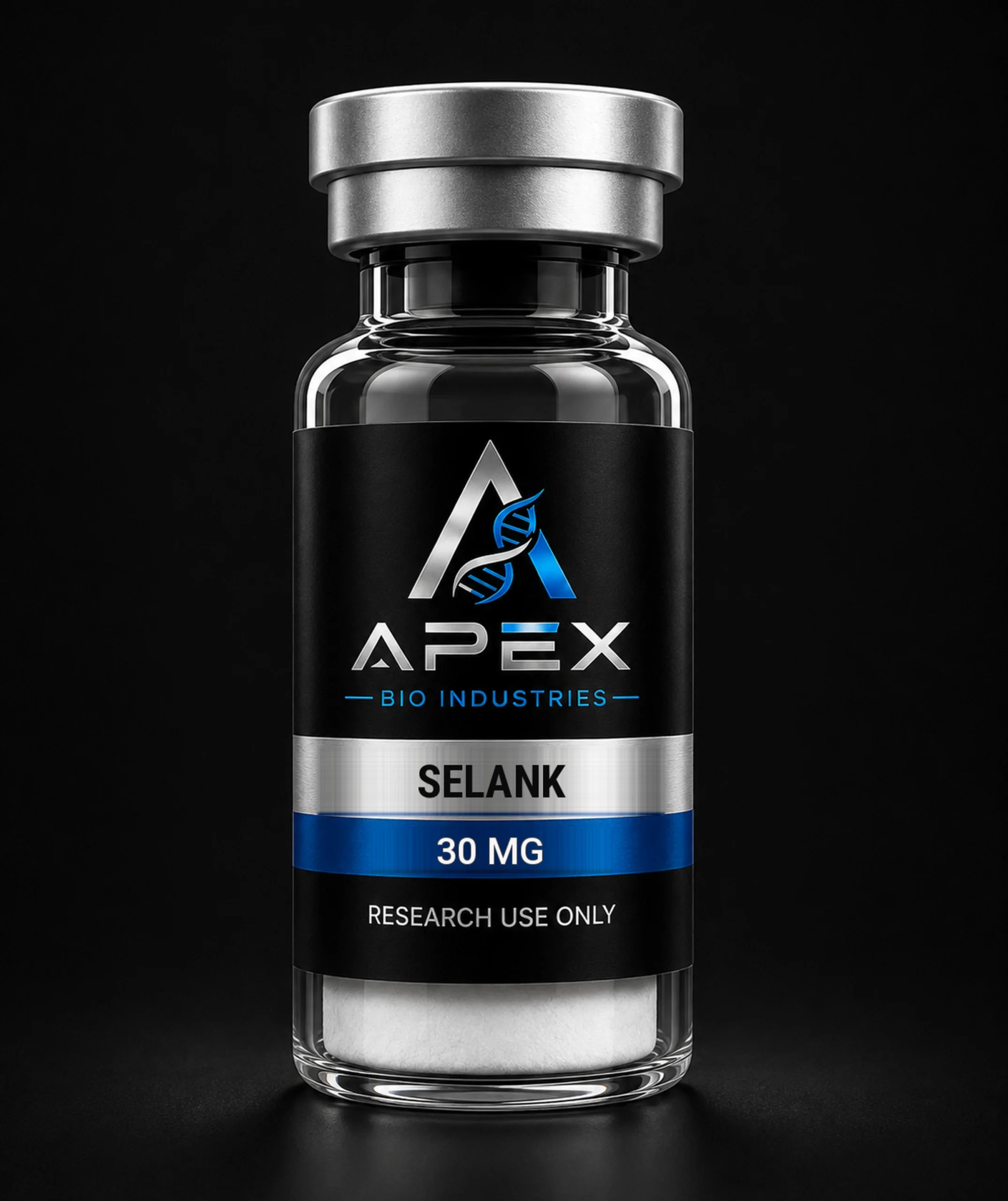
Selank is a synthetic seven-amino-acid peptide developed from the tuftsin sequence. Research from Russia and Eastern Europe has examined anxiety-related behavior, cognition, immune-neural signaling, and changes in gene expression associated with neurotransmitter systems. Proposed mechanisms involve GABAergic, serotonergic, and neurotrophic pathways, but the evidence base is smaller and less internationally replicated than for many approved neuropsychiatric drugs. Apex should present Selank as an experimental neuropeptide rather than as an established treatment for anxiety.
How It Works
- GABA-related signaling: Experimental studies have explored modulation of GABAergic receptor systems and anxiety-related behavior.
- Neurotransmitter regulation: Research has examined serotonergic and other monoaminergic pathways.
- Gene-expression and neurotrophic effects: Studies report changes in genes linked to neurotransmission, immune signaling, and neuroplasticity.
Research Areas
- Stress and anxiety models
- Cognitive and memory research
- Neurotransmitter signaling
- Neuroimmune interactions
Research / Study Context
- Animal behavioral studies: Models measure anxiety-like behavior, learning, memory, and stress responses.
- Regional human studies: Small clinical studies have evaluated anxiety-related and cognitive endpoints, largely outside the United States.
Key Research Findings
- Selank has a distinctive research history but limited large international trials.
- Mechanistic findings are suggestive rather than definitive.
- It is not FDA-approved in the United States.
Scientific Reference Starter Set
- Peptide Education Hub: Selank profile
- PubMed search: Selank tuftsin anxiety peptide
- PubMed search: Selank gene expression GABA